All the terms you need to know about cutting wood with our machines
By talking daily with customers and new partners, we know the most common needs and questions about Salvador optimizing machines and their different features. In this article we explain what an optimizing machine is and how it works, introducing the technical glossary. A vocabulary in which each term corresponds to a specific functionality of the machine, to better guide you through the world of optimized wood cutting.

What is an optimizing crosscut saw
An optimizing crosscut saw is a machine designed to automatically cut material to length and according to a preset cutting list.
Cutting list
The cutting list is a program set by the operator in the office or directly on the machine, where the lengths to be cut and the number of pieces to be produced are indicated. Each length can be assigned a label to be printed via a printer. You can also assign the priority or value you want to give to each length, to get the best result according to your needs.
Optimization
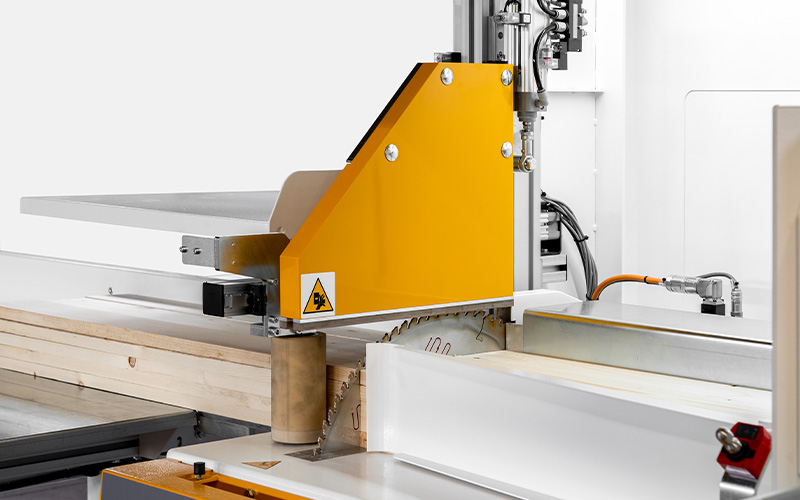
Optimization is a working mode where the machine, automatically recognizing the size of the loaded material, calculates the best cutting sequence to achieve the result with the least waste considering the lengths in the cutting list.
Optimization with priority by length
In most cases, the longest pieces are also the ones with the highest value which, by default, are given the highest priority. In optimization with priority by length, the system will therefore tend to produce the longest parts first, again considering the set rejection percentage.
Optimization with manual priority
To customize optimization, a given length can be given a higher priority regardless of size. The machine will always consider the lowest possible scrap, but will prefer lengths that have been assigned a higher priority.
Optimization with priority by value
Another option for customizing the machine’s priorities is value-based prioritization. You can assign a value to each length so that the machine will calculate the cutting sequence in which the sum of the values assigned to the parts is the greatest possible
Defecting
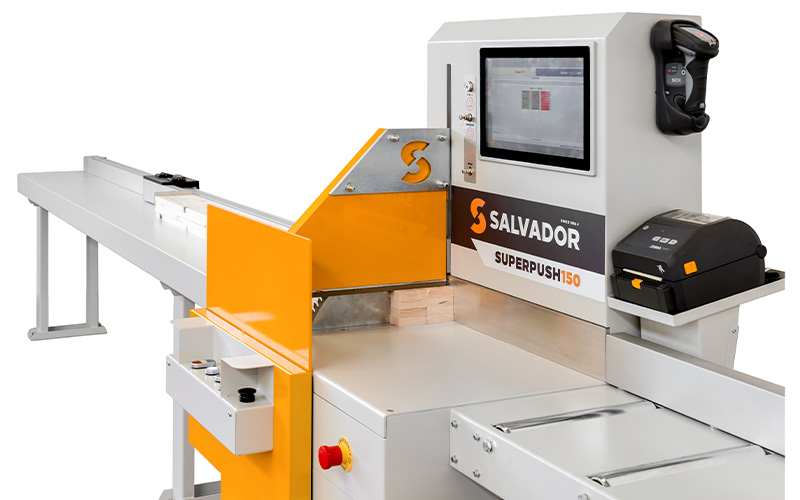
In single-table operations in optimization mode, the operator can mark any unwanted defects, such as knots, cracks, etc., with a special chalk. The optimizer automatically recognizes these marks and takes them into account when calculating the cutting sequence.
Fixed cutting
If the boards have the same feed length and have no defects in them, it is not important for some customers to optimize, only to repeat a cutting sequence decided by the operator several times. In this mode, it is possible to let the machine read the length of the loaded material, or manually preset the length that will be loaded.
Cutting on mark
In some cases, the goal is not to cut following a cutting list, but simply to remove defects and imperfections from the table. To do this, the operator can mark the parts to be removed with a special chalk, and the machine will perform the cut exactly on the marks.
Stack cutting
If it is not necessary to remove defects from the boards and you have boards of equal length, you can parcel cut them to increase machine productivity.
Grading
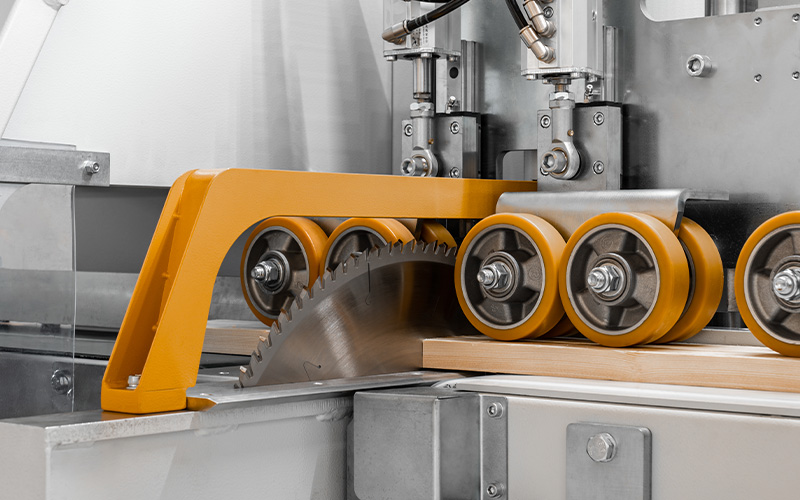
The operator can grade the quality of a board, or part of a board, using a special chalk. The software on Salvador optimizers can handle up to 5 standard grades. A different cut list can be assigned to each quality. The machine will automatically recognize the set quality and switch to the corresponding cutting list from time to time.
The Salvador optimizer glossary is an indispensable tool to get a thorough understanding of our machines and their functionality. In fact, we have designed different cutting modes to meet the various needs of our customers, always keeping the same goal: to optimize the use of wood. For more information about our products or to receive specific advice, please do not hesitate to contact us.

